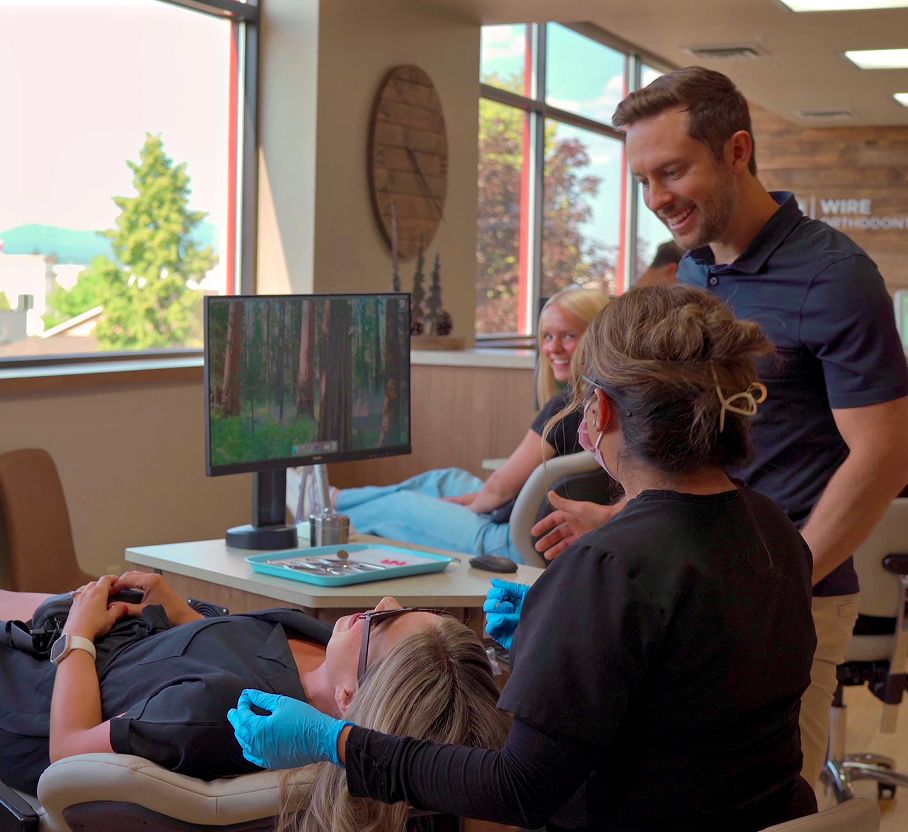
Yes, kids can get Invisalign. Many parents wondering “can kids get Invisalign?” are surprised to learn that clear aligners are made for younger patients through two specific options: Invisalign First for growing children and Invisalign Teen for older kids and adolescents. At Wire Orthodontics, Dr. Clint Wire evaluates each child individually to determine whether clear aligners are the right fit for their smile and stage of development. Our goal is an exceptional patient experience that delivers exceptional treatment and amazing results for every family who walks through our doors.
What Is Invisalign for Kids?
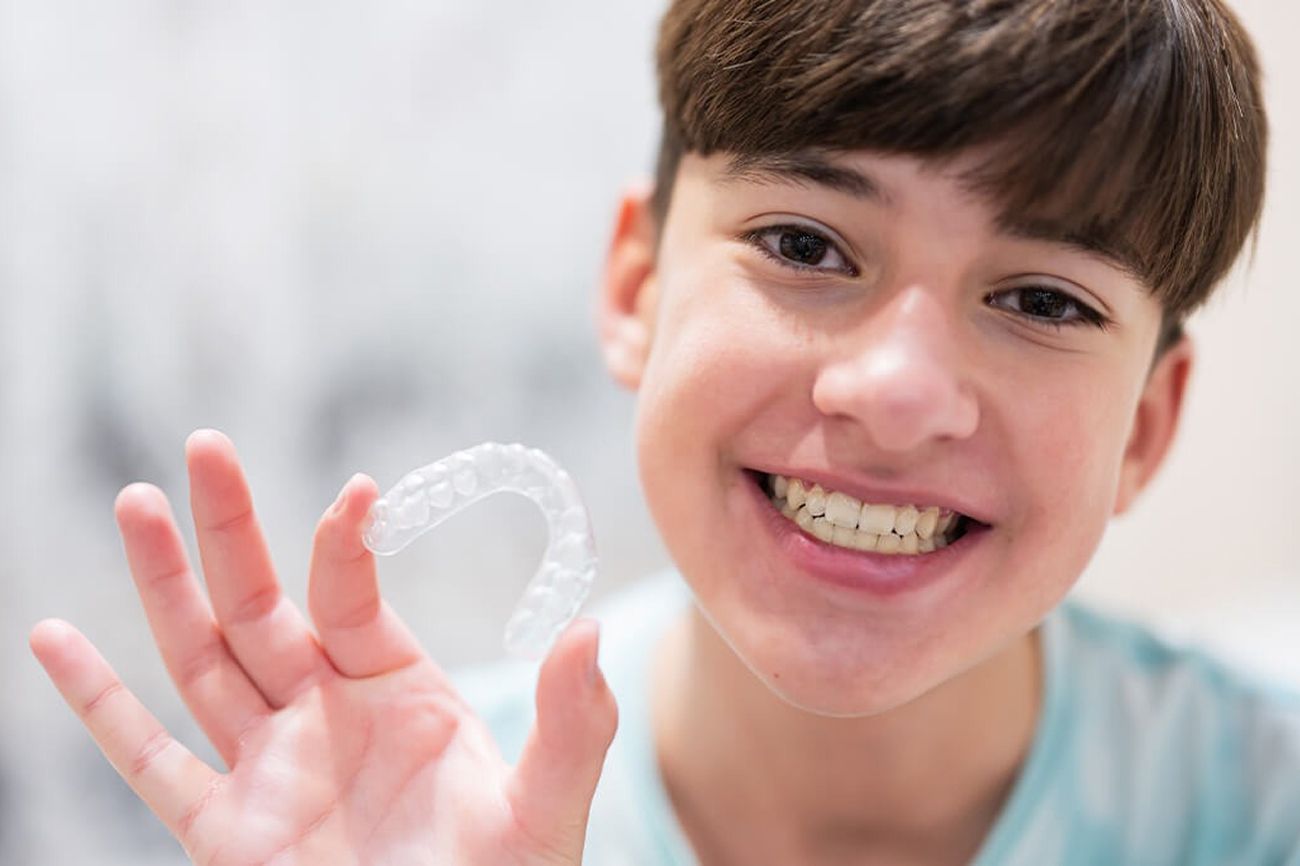
Invisalign for kids uses clear, removable aligner trays to straighten teeth without metal brackets or wires. The system comes in two pediatric options: Invisalign First, made for young children still in early growth stages with a mix of baby and permanent teeth, and Invisalign Teen, built for older kids whose permanent teeth have mostly come in.
Each set of aligners is custom-made using a digital 3D scan of your child’s teeth. The trays gently shift teeth into better alignment over time, swapping out for a new set every week or two. Invisalign Teen even includes built-in compliance indicators, small blue dots that fade with wear, giving Dr. Wire a clear picture of how consistently the aligners are being used.
Not every child is a candidate for clear aligners. Some bite issues, jaw discrepancies, or behavioral factors may point toward traditional braces or phase one treatment instead. That’s why an orthodontic evaluation with a board-certified orthodontist is the only reliable way to know if Invisalign is right for your child, and it’s the foundation of the attention to detail you can trust at our family-owned practice.
How Does Invisalign Work for Children?
Invisalign for children works through a series of custom clear aligners worn 20 to 22 hours each day, with each tray gradually shifting teeth toward their ideal position. Treatment begins with a 3D digital scan, follows a precise plan mapped by your orthodontist, and typically spans 12 to 18 months depending on the case. The whole process is built around an exceptional patient experience for both kids and parents.
Here’s what the process looks like at our family-owned practice:
- Digital scan and planning. Dr. Wire uses a 3D scanner to capture a detailed model of your child’s teeth, then designs a custom treatment plan that maps every tooth movement from start to finish.
- Custom aligners arrive. Your child receives a series of trays, each slightly different from the last. They’ll switch to a new set every one to two weeks as directed.
- Daily wear. Aligners need to stay in for 20 to 22 hours per day. They come out only for eating, drinking anything besides water, and brushing or flossing.
- Regular checkups. Every six to eight weeks, your child visits us so Dr. Wire can check progress, monitor jaw growth, and hand off the next batch of trays.
- Final reveal. Once the active phase wraps up, retainers help hold the new alignment in place for the long haul.
Benefits of Invisalign for Kids and Teens
Clear aligners offer real advantages for younger patients, especially those who feel self-conscious about traditional braces or who play sports and instruments. The benefits of Invisalign for kids include easier oral hygiene, no food restrictions, a nearly invisible look, fewer emergency visits, support for healthy jaw growth, and a noticeable boost in confidence. Here are the benefits parents and kids notice most:
- Easier brushing and flossing. Since the trays come out, your child can clean their teeth normally, which protects against cavities and gum issues during orthodontic care.
- No food restrictions. Popcorn, apples, corn on the cob, sticky candy at birthday parties. Aligners come out at mealtime, so there’s no list of forbidden foods.
- Nearly invisible appearance. The clear trays are hard to notice in photos and conversation, which matters a lot to teens getting through school and social moments.
- Fewer emergency visits. No brackets to break and no wires poking the inside of a cheek means fewer unexpected trips to our family-owned practice.
- Supports healthy jaw development. For younger kids, Invisalign First can help guide jaw growth during important developmental years, addressing crowding and spacing while the mouth is still changing.
- Boosts confidence. Kids and teens often feel better about smiling, laughing, and being on camera throughout their orthodontic care, which is exactly the kind of amazing results families hope for.
Invisalign vs. Traditional Braces for Kids
Both options can produce a smile you’ll love, but they work differently and suit different kids. Traditional braces are fixed to the teeth and excel at complex bite corrections, while Invisalign is removable and depends on your child wearing the trays consistently. Cost can be comparable between the two; case complexity tends to drive pricing more than the appliance type.
| Feature | Invisalign | Traditional Braces |
|---|---|---|
| Visibility | Clear, hard to notice | Visible metal brackets and wires |
| Removable | Yes, for eating and cleaning | No, fixed to teeth |
| Food restrictions | None | Sticky, hard, and chewy foods limited |
| Cleaning teeth | Easy, brush and floss normally | Requires extra tools and time |
| Compliance needed | High, 20-22 hours/day | Built-in, always working |
| Complex cases | Works for many cases | Better for severe corrections |
| Emergency visits | Rare | More common (broken brackets, poking wires) |
| Comfort | Smooth plastic edges | Brackets may irritate cheeks initially |
The right choice depends on your child’s specific bite, their maturity level, and their lifestyle. Dr. Wire walks each family through the pros and cons of both options during a free consultation, so you have the information you need to choose with confidence and feel supported every step of the way.
What Affects the Cost of Invisalign for Kids?
The cost of Invisalign for kids depends mainly on case complexity, treatment length, and which version (Invisalign First or Invisalign Teen) your child needs. Mild crowding typically costs less than cases involving bite correction or extended treatment. Insurance, payment plans, and tax-advantaged accounts often help make orthodontic care more manageable for families.
Here are the main factors that shape what you’ll pay:
- Case complexity. Mild spacing or crowding requires fewer aligners and less chair time than complex bite correction.
- Treatment length. Shorter cases (around 6 to 9 months) generally cost less than full treatment (12 to 18 months or longer).
- Invisalign First vs. Teen. Pricing can differ between the pediatric versions and adult Invisalign plans.
- Dental insurance. Many plans include orthodontic benefits that cover a portion of treatment for dependents under a certain age.
- HSA and FSA funds. Health savings and flexible spending accounts can typically be used toward orthodontic care.
- Replacement aligners. Lost or damaged trays may add to the total, so building habits around aligner storage matters.
We’re happy to discuss specific costs and payment options during your child’s free consultation.
Is Your Child a Good Candidate for Invisalign?
Strong Invisalign candidates have most of their permanent teeth, mild to moderate crowding or spacing, and the discipline to keep aligners in for 20 or more hours daily. Younger kids in mixed dentition may be candidates for Invisalign First, which addresses crowding and guides early jaw development.
A few things Dr. Wire considers during an evaluation:
- Dental development. For Invisalign Teen, most permanent teeth should be in. For Invisalign First, the goal is often guiding growth during the mixed dentition phase.
- Compliance ability. Is your child mature enough to keep trays in, store them safely, and follow instructions? Some kids thrive with this responsibility; others may do better with braces.
- Type of correction needed. Mild to moderate crowding, spacing, and certain bite issues respond well to Invisalign. Severe jaw discrepancies or complex bite problems may call for traditional braces or phase one treatment first.
- Lifestyle factors. Sports, instruments, and dietary preferences can all play into which approach makes the most sense.
The only way to know for sure is a hands-on orthodontic consultation. Dr. Clint Wire (DDS, MS), a board-certified orthodontist, personally evaluates each child to recommend the best path forward. Because we’re a family-owned practice, you’ll see Dr. Wire at every visit, from your first visit to your final reveal.
Frequently Asked Questions
What is the best age for kids to start Invisalign?
The American Association of Orthodontists recommends a first orthodontic check by age 7, which is when Dr. Wire can identify whether Invisalign First might be appropriate. Invisalign Teen typically works best once most permanent teeth have come in, often between ages 11 and 14. The right timing varies for every child, which is why early evaluation matters.
How long does Invisalign treatment take for children?
Most children complete Invisalign treatment in 12 to 18 months, though some shorter cases finish faster and complex ones take longer. Consistent daily wear is the biggest factor in staying on schedule. Skipping hours or losing trays can extend treatment time, so building good habits early really pays off.
Will my child be able to keep aligners in at school?
Yes. Aligners stay in throughout the school day, including during class, recess, and sports practice. They only come out for eating lunch, drinking anything besides water, and brushing afterward. Many parents pack a small case so trays have a safe home during meals, which helps prevent the most common cause of replacement: aligners tossed in a napkin and lost.
Does Invisalign hurt kids?
Most kids feel some pressure or tenderness for a day or two when starting a new set of aligners, which is a normal sign the trays are working. The discomfort is typically milder than what’s reported with traditional braces, and there are no brackets or wires to irritate cheeks and lips. Over-the-counter pain relief usually handles any soreness easily.
Can Invisalign fix overbites and underbites in kids?
Invisalign can correct many overbites and underbites in children, especially mild to moderate cases. More severe bite issues or significant jaw discrepancies may require traditional braces or phase one treatment first. Dr. Wire evaluates each child’s bite during the free consultation to recommend the approach with the best outcome.
How do I help my child stay compliant with aligners?
Build routines around mealtimes: aligners come out, go straight into their case, and go back in right after brushing. Set phone reminders for tray changes, praise consistent wear, and use the compliance indicators on Invisalign Teen as a low-pressure check-in tool. Most kids adapt quickly once aligners become part of the daily rhythm.
If you’re weighing Invisalign for your child, the best next step is an in-person evaluation with a board-certified orthodontist who can give you a clear, personalized recommendation. At Wire Orthodontics, our family-owned practice provides personalized orthodontic care with attention to detail you can trust every step of the way, and we’d love to help your child find a smile you’ll love. You can schedule a free consultation to find out if Invisalign is the right fit for your child’s smile.