
Expansion & Airway Treatment
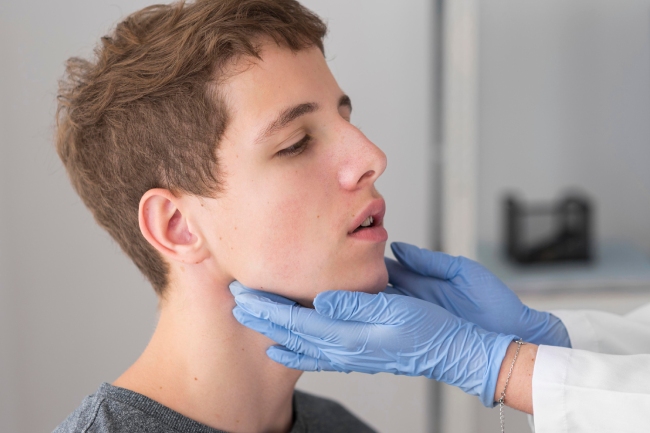
Orthodontics has always been concerned with how teeth fit together. Increasingly, it is also concerned with how the airway functions — and the two are more connected than most patients realize. The size and shape of the dental arches have a direct relationship to nasal breathing, airway volume, and in younger patients, the developmental patterns that influence both. Expansion treatment addresses the width of the upper or lower arch, and in doing so can have meaningful downstream effects on breathing, sleep quality, and long-term jaw development.
Palatal expansion is most effective when it is initiated early, while the midpalatal suture is still responsive to gentle, sustained force. In younger patients, expansion can create space for incoming permanent teeth, reduce the need for extractions later, and improve the relationship between the upper and lower jaws before those patterns become fixed. In older patients, expansion is still possible but typically involves a different approach and a more detailed conversation about realistic outcomes.
Airway-focused orthodontics requires a clinician who is looking at more than the teeth. Dr. Wire evaluates each patient’s airway and breathing patterns as part of a comprehensive treatment picture, and when expansion is indicated, it is planned with both the dental and airway implications in mind. If your child snores, breathes primarily through their mouth, or has been evaluated for sleep-disordered breathing, an orthodontic consultation is a worthwhile part of that conversation.
Phase I Treatment
Phase I treatment — sometimes called interceptive orthodontics — refers to a first phase of orthodontic care that begins while a child still has a mix of baby and permanent teeth, typically between the ages of seven and ten. The goal is not to finish treatment at this stage. The goal is to address specific developmental concerns early enough that the overall treatment picture becomes simpler, shorter, or more achievable than it would have been if intervention had waited until all the permanent teeth were in.
Not every child needs Phase I treatment. The American Association of Orthodontists recommends that children have an initial orthodontic evaluation by age seven, and that evaluation is what determines whether early intervention makes clinical sense. Dr. Wire approaches that evaluation with a straightforward standard: if treating something now produces a meaningfully better outcome than waiting, he will recommend it. If waiting produces the same result, he will say so.
When Phase I treatment is indicated, it might involve an expander, partial braces on select teeth, a space maintainer, or another appliance designed to guide development during a specific window of time. After Phase I is complete, most patients enter a resting period before Phase II — typically full braces or aligners — begins once the remaining permanent teeth have come in. Dr. Wire monitors patients through that resting period and manages the transition to Phase II when the timing is right.

Adult Treatment
There is a persistent assumption that orthodontic treatment is something that happens in adolescence or not at all. In practice, that is not how teeth work. Adults seek orthodontic treatment for a wide range of reasons — teeth that shifted after a retainer was lost, bite issues that were never addressed, changes that followed extractions or other dental work, or simply a long-standing concern that finally feels worth acting on. Whatever the reason, the biology of tooth movement does not have an expiration date.
Adult cases do carry their own considerations. Teeth that have been in place for decades can sometimes move more slowly than those of a growing patient. Prior restorations — crowns, bridges, implants, veneers — need to be factored into the treatment plan. Gum and bone health must be in good standing before orthodontic forces are applied, which is why Dr. Wire coordinates with your general dentist and any relevant specialists before treatment begins. These are manageable considerations, not reasons to avoid treatment, but they do require a clinician who takes them seriously.
Wire Orthodontics sees a meaningful and growing number of adult patients, and that is not incidental. Adults who have done their research tend to choose practices where the clinical depth matches their expectations — where the doctor is present at every appointment, where complex cases are handled regularly, and where the conversation is honest rather than optimistic. If you have been thinking about treatment for a while and have questions about what it would actually involve for your specific situation, the consultation is the right place to start.

Jaw Surgery Treatment
Some bite discrepancies cannot be corrected with orthodontics alone. When the upper and lower jaws are significantly misaligned — not just the teeth, but the underlying skeletal structures themselves — the most appropriate and lasting solution involves a coordinated approach between Dr. Wire and an oral and maxillofacial surgeon. This is called orthognathic surgery, and the orthodontic component is a critical part of what makes the surgical result stable and functional.
The process typically unfolds in three stages. Pre-surgical orthodontics comes first — a phase of treatment that aligns the teeth within each jaw individually, positioning them where they need to be for the surgeon to make the skeletal correction. The surgery itself repositions one or both jaws to the correct relationship. Post-surgical orthodontics follows, fine-tuning the bite and detailing the result once the jaws are in their new position. The full process requires close, ongoing communication between Dr. Wire and the surgical team, and that coordination is something he manages personally from the first appointment through the completion of treatment.
Patients who need jaw surgery are often those who have lived for years with a bite that never quite worked — chronic jaw discomfort, difficulty chewing, speech patterns affected by the jaw relationship, or a profile they have felt self-conscious about. The combined orthodontic and surgical approach addresses all of those concerns at the root level. It is a significant undertaking, and Dr. Wire will walk through every stage of the process with you in detail so that you understand exactly what to expect before any decisions are made.

Cleft Lip/Palate Treatment
Patients born with cleft lip and palate require orthodontic care that is integrated into a broader team-based treatment plan spanning childhood through early adulthood. The orthodontic component is one part of a coordinated effort that typically involves oral surgeons, plastic surgeons, speech therapists, and other specialists — and the sequencing of that care matters as much as the care itself.
Dr. Wire has experience managing the orthodontic component of cleft lip and palate treatment and understands how it fits within the larger treatment timeline. Orthodontic involvement often begins in early childhood to manage arch development and tooth eruption, continues through the mixed dentition years in coordination with bone grafting procedures, and extends into adolescence and adulthood to finalize the bite and, when indicated, prepare for any orthognathic surgery that may be part of the overall plan.
Families navigating cleft lip and palate treatment are managing a significant amount of care across multiple providers over many years. What Wire Orthodontics offers within that picture is a consistent, credentialed orthodontist who is genuinely invested in the long-term outcome — one who communicates directly with the rest of your child’s care team and who will be present at every appointment throughout the process.
Retainers
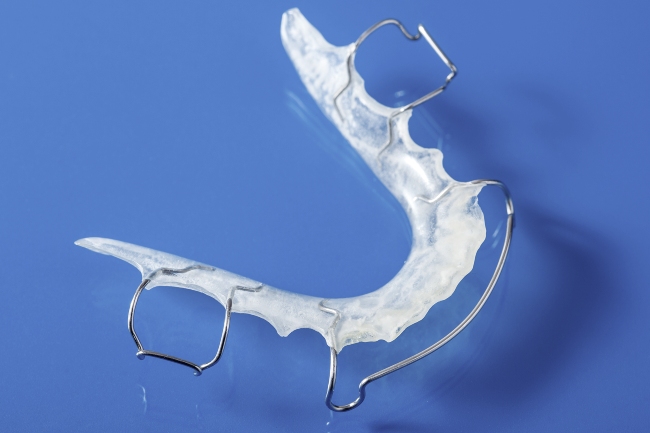
Retainers are the final stage of orthodontic treatment, and they are just as important as everything that came before them. Teeth have a natural tendency to shift after they have been moved — a phenomenon called relapse — and retainers are what prevent that from happening. The result you finish treatment with is only as permanent as your commitment to wearing your retainer.
Wire Orthodontics offers both removable and fixed retainer options, and Dr. Wire will recommend the approach that makes the most sense for your specific case, your anatomy, and your habits. Removable retainers are typically worn full-time immediately after treatment and are gradually transitioned to nighttime wear as the teeth stabilize. Fixed retainers are bonded to the back surface of the teeth — most commonly the lower front teeth — and provide continuous, passive retention without requiring any daily compliance on the patient’s part.
For patients who completed orthodontic treatment elsewhere and are looking for ongoing retainer support — replacement retainers, repairs, or monitoring — Wire Orthodontics welcomes those patients as well. Retention is a permanent commitment, but for most patients, it quickly becomes a routine part of life. The effort is minimal. The alternative, repeating treatment because retention was neglected, is considerably less so.