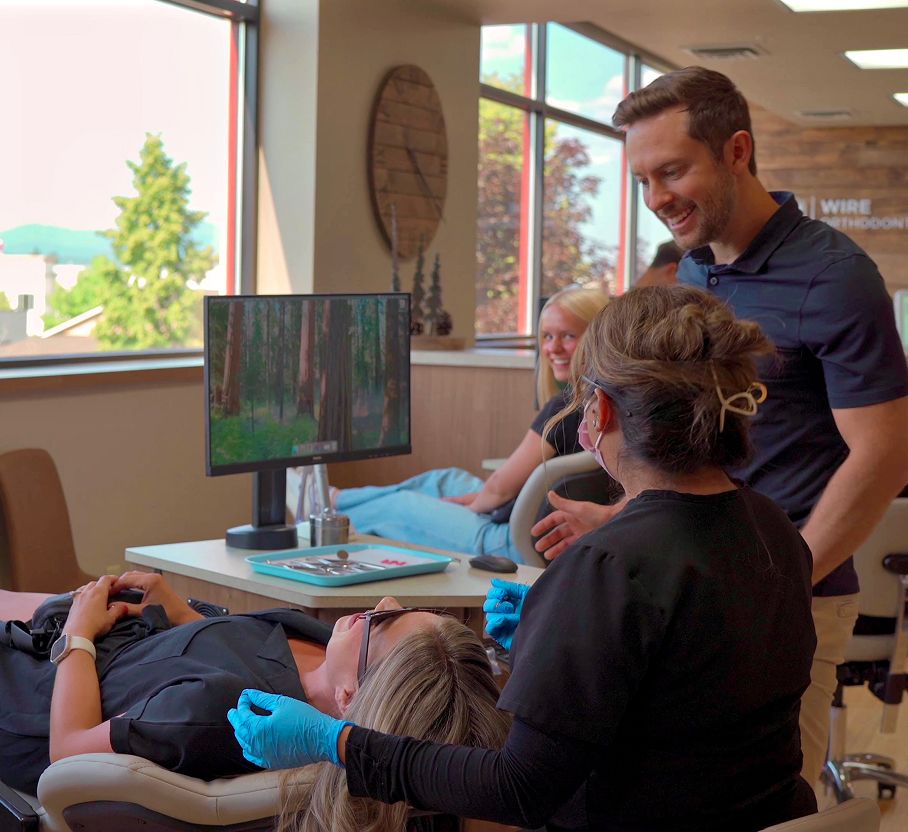

Braces for kids are far more than a cosmetic fix. At Wire Orthodontics, Dr. Clint Wire helps young patients build healthier smiles that protect their teeth, gums, and bite for decades to come. Understanding how braces for kids can support lifelong oral health starts with knowing what these appliances actually do and why timing matters so much during childhood. Families across Liberty Lake have come to rely on early orthodontic care as a smart investment in their children’s future well-being.
What Are Braces for Kids?
Braces for kids are orthodontic appliances that gradually align teeth and jaws while a child is still growing. Because the bones and tissues are developing, Dr. Wire can guide growth, correct bite issues, and create space for permanent teeth in ways that aren’t possible later in life. This developmental stage makes childhood an ideal window for foundational orthodontic care that pays off for years.
Children’s orthodontics isn’t one-size-fits-all. Depending on what your child needs, treatment may include:
- Traditional braces with brackets and an archwire that Dr. Wire adjusts over time
- Phase one treatment, which addresses specific issues early while baby and adult teeth are both present
- Palatal expanders to widen a narrow upper jaw and create room for incoming teeth
Early orthodontic care targets both how a smile looks and how it functions. Crowding, crossbites, and jaw discrepancies can affect chewing, speech, and even breathing. Addressing these issues during development often leads to simpler treatment and healthier long-term outcomes than waiting until problems become more complex and harder to manage.
How Braces Work to Improve Kids’ Oral Health in Liberty Lake
Braces work by applying gentle, continuous pressure that slowly shifts teeth into proper position. Brackets bond to each tooth, and an archwire connects them. As a board-certified orthodontist, Dr. Wire adjusts the wire at regular visits, which gradually moves teeth and guides jaw development. Over months of treatment, this steady pressure produces straighter teeth, a balanced bite, and a healthier foundation for lifelong oral health that families throughout Liberty Lake count on.
Straight teeth do more than look good. When teeth are properly aligned, brushing and flossing become much easier, which lowers the risk of cavities and gum disease. Crowded or overlapping teeth create hiding spots for plaque that a toothbrush simply can’t reach. By improving alignment early, kids learn good hygiene habits on teeth that are easier to keep clean throughout their growing years.
Bite correction is another major benefit. An overbite, underbite, or crossbite can cause uneven wear on enamel, jaw strain, and even headaches over time. Correcting the bite during childhood protects the teeth from premature damage and keeps the jaw joints functioning comfortably well into adulthood.
For kids with a narrow upper jaw, palatal expanders gently widen the palate to create more space. This not only makes room for incoming adult teeth but can also improve nasal airflow, which supports better breathing and sleep. When needed, two-phase treatment uses an early phase to guide jaw growth, followed by a second phase once all permanent teeth have erupted, producing strong results with less complexity overall.
Long-Term Oral Health Benefits of Kids’ Braces
The benefits of early orthodontic care reach far beyond an attractive smile. Children who receive timely treatment often enjoy stronger oral health well into adulthood. Consider what well-timed braces can offer your child:
- Lower lifetime risk of cavities and gum disease. Straight teeth are easier to brush and floss thoroughly, which reduces plaque buildup year after year.
- Less tooth wear and jaw pain. A corrected bite distributes chewing forces evenly, protecting enamel from chipping and reducing strain on the jaw joints.
- Better chewing and digestion. Properly aligned teeth break down food more effectively, which supports overall nutrition.
- Clearer speech development. Correcting tongue posture, spacing, and bite issues can improve pronunciation during key developmental years.
- Healthier airway and breathing. Expanding a narrow palate or correcting jaw position can improve airflow and may support better sleep quality.
- Greater self-confidence. Kids who feel good about their smile tend to take better care of it, building hygiene habits that last a lifetime.
According to the American Association of Orthodontists, children should have their first orthodontic evaluation by age 7. Catching issues early gives Dr. Wire the chance to intervene at the right moment, often preventing more involved treatment later. That’s the kind of attention to detail you can trust when you’re investing in your child’s long-term health.
Should My Child Start Braces Early or Wait?
One of the most common questions parents ask is whether their child should start treatment now or wait. The honest answer depends on what’s happening with the teeth and jaw. Phase one treatment, typically started between ages 7 and 10, takes advantage of active growth to guide the jaw and create space for adult teeth. Waiting until the teen years means working only with teeth, not bone development, which can sometimes require extractions or more involved care.
| Factor | Early (Phase One) Treatment | Waiting Until Teen Years |
|---|---|---|
| Typical age range | 7–10 years | 11–15 years |
| Primary focus | Guide jaw growth, create space | Align permanent teeth |
| Complexity | Often simpler, more preventive | May require more involved care |
| Risk of extractions | Lower in many cases | Higher when crowding is severe |
| Best for | Crossbites, narrow palate, severe crowding | Cosmetic alignment, mild bite issues |
Not every child needs early treatment. Some issues, like mild crowding or minor spacing, can safely wait until more permanent teeth come in. Others, such as crossbites, significant crowding, or jaw discrepancies, are best addressed while the bones are still growing. An evaluation around age 7 helps Dr. Wire determine the right approach for your child, whether that means starting soon, monitoring growth, or waiting for the right window. Parents in Liberty Lake appreciate having a clear sense of timing before any treatment begins.
What Affects the Cost of Braces for Kids?
The cost of braces for kids depends on the type of treatment, the complexity of the case, and how long care will take. Simple alignment with traditional braces typically costs less than two-phase treatment that includes a palatal expander and a follow-up phase. Insurance benefits and flexible payment options can also lower out-of-pocket cost considerably.
Here are the main factors that influence cost:
- Type of treatment. Traditional braces, palatal expanders, and two-phase plans each have different price points.
- Severity of the issue. Mild crowding requires less work than significant bite correction or jaw guidance.
- Length of treatment. Longer cases or multi-phase care involve more appointments and materials.
- Retainers and follow-up care. Retainers protect the investment after braces come off and are an important part of the total picture.
- Insurance and payment flexibility. Orthodontic insurance benefits and flexible payment options can significantly reduce out-of-pocket cost.
As a family-owned practice, we believe in honest, clear conversations about cost. During your free consultation, Dr. Wire will walk you through the recommended plan, what it includes, and the payment options available to your family. Families in Liberty Lake value knowing exactly what to expect after your child’s exam, with no surprises down the road.
Is Your Child a Good Candidate for Braces?
Many parents wonder how to tell if their child actually needs braces. Some signs are obvious, while others are easy to miss without a professional eye. Common indicators include:
- Crowded, crooked, or overlapping teeth
- Noticeable gaps between teeth
- A crossbite, overbite, or underbite
- Difficulty chewing or biting food
- Mouth breathing or snoring
- Early or late loss of baby teeth
- Thumb-sucking habits that have affected tooth position
The American Association of Orthodontists recommends that every child have a first orthodontic check by age 7. By this age, enough adult teeth have come in for Dr. Wire to spot developing issues, even ones that aren’t visible to parents. An early visit doesn’t always mean early treatment. Sometimes the best plan is to monitor growth and act later, at exactly the right moment. Many Liberty Lake families schedule that first check around this age simply for peace of mind.
If you’ve noticed any of these signs, or if your dentist has suggested an orthodontic opinion, a free consultation with Dr. Wire is the clearest path forward. You’ll get a straightforward recommendation tailored to your child, delivered with the exceptional patient experience our practice is known for.
Frequently Asked Questions
What is the best age for kids to get braces?
The American Association of Orthodontists recommends a first orthodontic evaluation by age 7. While not every child needs braces at that age, this early check allows Dr. Wire to identify issues that are easier to correct during growth. Active treatment most often begins between ages 9 and 14, depending on what your child needs.
Do braces really improve long-term oral health?
Yes. Straight teeth and a balanced bite make brushing and flossing more effective, which lowers the lifelong risk of cavities and gum disease. Correcting bite issues also reduces uneven tooth wear, jaw strain, and the chance of needing complex dental work later in life.
How long do braces for children take?
Most children wear braces for about 12 to 24 months, though some cases are shorter and others longer. Two-phase treatment includes an early phase of about 6 to 12 months, a resting period, and a second phase once all permanent teeth have come in. Dr. Wire will give you a personalized estimate at your consultation.
Are braces uncomfortable for kids?
Most kids feel mild soreness for a few days after braces are placed and after adjustments. This discomfort usually responds well to soft foods and over-the-counter pain relievers. Modern braces are designed to be more comfortable than ever, and most children adjust within a week.
What is the difference between Phase One and Phase Two treatment?
Phase one treatment is early orthodontic care, typically between ages 7 and 10, that guides jaw growth and creates space for adult teeth. Phase two happens later, once all permanent teeth have erupted, and focuses on fine-tuning alignment and bite. Together, they often produce healthier outcomes with less complexity than waiting.
Does my child need braces if their teeth look straight?
Possibly. Some orthodontic issues are hidden in the bite or jaw rather than visible in the front teeth. A crossbite, deep bite, or jaw discrepancy may not be obvious but can still affect long-term oral health. An evaluation with Dr. Wire is the only way to know for sure, and it’s a simple way to protect your child’s smile they’ll love for years to come.